The short answer: Use a script when accuracy, timing, or precise messaging matters — such as training videos, commercials, and narrated videos. Skip the script for interviews, testimonials, and story-driven videos where real conversation creates a stronger connection with your audience. Want all the details? Read on!
When you decide to produce a video for your business, that is the first of many more decisions you’ll make as you go through the video production process. One of the choices you’ll make early on is if you need to write a script for your video (or not). There are no hard and fast rules regarding using a video script; so, when should you write a script for your video? To help bring you some clarity, we have identified a few instances in which we would either encourage or discourage writing a script for your video.
In this article, we’ll discuss both and also provide examples of videos we have produced using video scripts and those where script-writing has been avoided. Let’s get into it!
There are 3 kinds of videos that we would always recommend writing a script for. The first is training videos. For training videos, precision is a requirement. Content must be covered exhaustively in order to provide thorough training. Processes and procedures must be carefully reviewed (often by committee) and communicated in a specific manner. Thus, word choice is also important and can’t be left to chance. This can only be ensured with the use of a script.
The second type of video we would always recommend scripting is a commercial spot. The reason writing a script works so well for this type of video is due to the time constraint. A commercial spot must adhere to timing down to the second. The only way to be certain that your message is conveyed just so in a particular amount of time is by scripting. This way, the voice-over or talent delivery can be timed prior to recording, and the wording can be edited and adjusted so that it resonates with your audience.
Here is an example of a commercial we produced for Damar Services that utilizes a script to ensure precise messaging and timing.
The third type of video we’d recommend using a script for is a video where the only visual is b-roll, meaning that the speaker is never seen on camera. Without seeing someone talking and establishing that personal (often more casual) feel, more weight is placed upon the narration accompanying the video. Thus, it is our opinion that it is a better idea to have a more polished feel that comes with a scripted voice-over.
Check out this video we produced for Jones and Sons. We worked with them on script development and captured the b-roll at their facilities.
There are a few types of videos where a script might be in order. We’ll talk at the end of this section about a few tips for evaluating whether or not to use a script. The first type of video you may want to use a script for is internal communications videos. This is a rather broad category, but if you’re communicating particular information across all divisions of your company, the use of a script for your video can help make sure you cover all your bases when delivering your message.
We also encourage you to consider using a script for any video that is informative in nature. Of course, there is some overlap with the internal communications video category as most internal comms videos are informative. But there are also outward facing applications for informative videos. We can think of several examples from videos we’ve produced: facility tours, client updates, descriptions of programs or services you offer, or process videos for customers. Again, in these instances, you’ll want to deliver the information in a comprehensive manner and a script can help accomplish that goal.
So, how do you evaluate the need for a script for these types of videos? Here are a couple of things we consider when making recommendations to our clients.
If you’re looking for a casual delivery and have someone on camera who is very familiar with the content, you might elect to utilize an outline rather than a full script. This can be a happy medium solution where you can ensure you cover all your bases while also letting someone deliver the information in their own words.
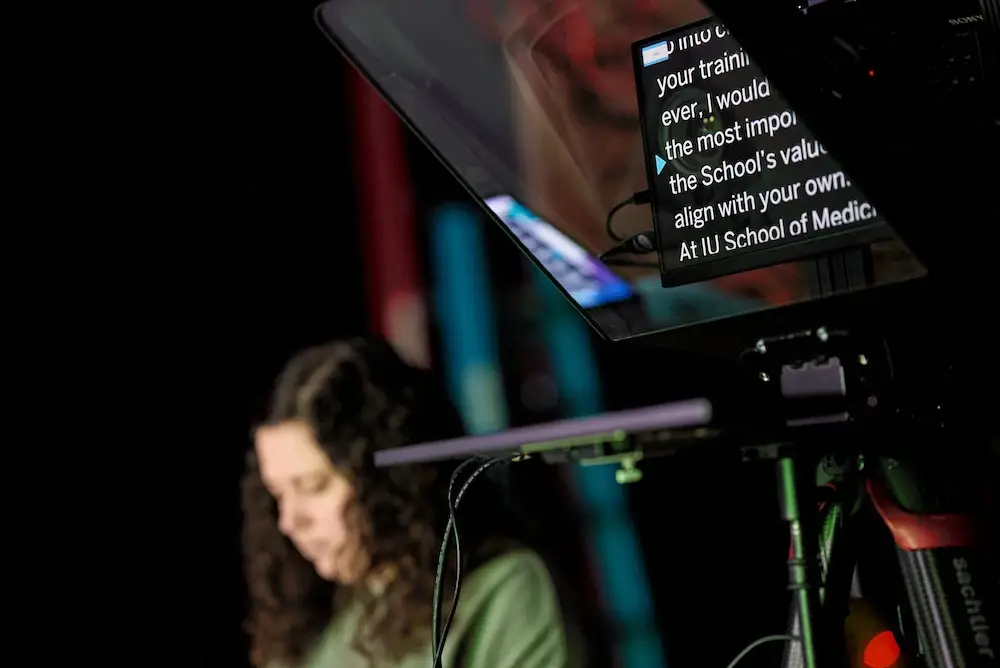
We produced the video below for the Indiana University School of Medicine Department of Surgery as an informative overview video for their department. In this case, they chose to write a script to be sure they hit all the relevant points and kept the video on a tight timeline.
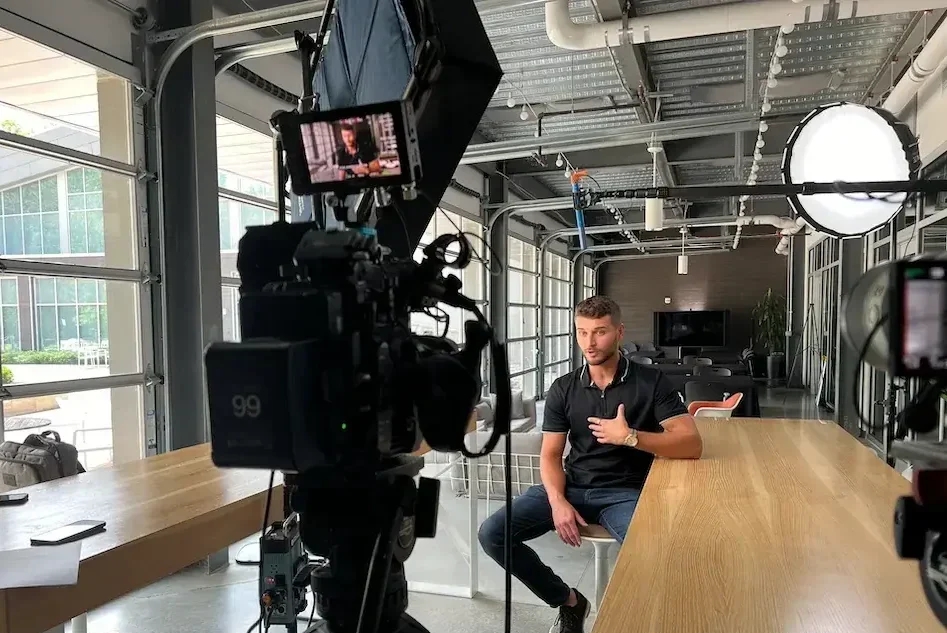
There are a few types of videos we regularly produce where we would absolutely discourage any script-writing. I suppose we could boil it all down to any interview-style video, particularly with a story-telling element. Think of an impact story video for a non-profit, a corporate vision or company culture video, or an employee or client testimonial video. These work because they rely on personal conviction and experience. Even if a script is based on those things, it loses a little something and feels less genuine in script form.
In fact, when producing interview videos, we dissuade our clients from writing out (essentially scripting) answers to the interview questions. We have found that people often can’t divert from the answers they have written down, and it becomes very difficult to capture the natural, conversational delivery we (and they!) are looking for.
This video is a great example of an interview-style video that tells a personal story. It was used at an event to raise funds for cancer research. Imagine if this video were scripted — it certainly wouldn’t be the same.
If you’re reading this article, we assume you probably have a video in mind that you’re preparing for. As you think things through, whether or not to use a script for your video is definitely a question you’ll have to answer. We hope this post has been helpful as we’ve shared our guidelines for when to use a script and when to hold off. If you’ve decided to write a script, be sure to check out our tips for improving your video script before filming.
If you have questions, need help with video script development, or are looking for an experienced video production company, let’s talk!
How to Write a Script for Video
Get our free PDF with tips for writing a script for video. Enter your email address and we’ll send a download link straight to your inbox!
Do all business videos need a script?
No. Training videos, commercials, and narrated videos usually benefit from a script, while interviews and testimonials often feel more authentic without one.
Should interview videos be scripted?
Generally, no. Interview-style videos typically perform better when speakers answer naturally rather than reading prepared responses.
Can I use an outline instead of a script?
Yes, in some cases. An outline is often a good compromise when you want conversational delivery while ensuring important points are covered.
What types of videos should always have a script?
Training videos, commercial spots, and narrated videos with voice-over generally benefit from scripting because they require accuracy, consistency, and precise timing.